Convection Exploration ConvEx
Integrated exploration of hydrothermal convection cells as target for deep geothermal exploitation
The economic viability of hydrothermal geothermal energy projects depends primarily on the temperature and flow rate at the wellhead. To explore deep geothermal reservoirs with highly permeable, hydraulically active zones and high fluid temperatures, information on hydrogeological conditions is typically derived from 3D seismic data and nearby boreholes. In some geothermal projects (e.g., Trebur and Geretsried), however, this data set has proven insufficient; the water yield from the target structure was too low, so that the projects had to be discontinued or continued with extensively modified technology.


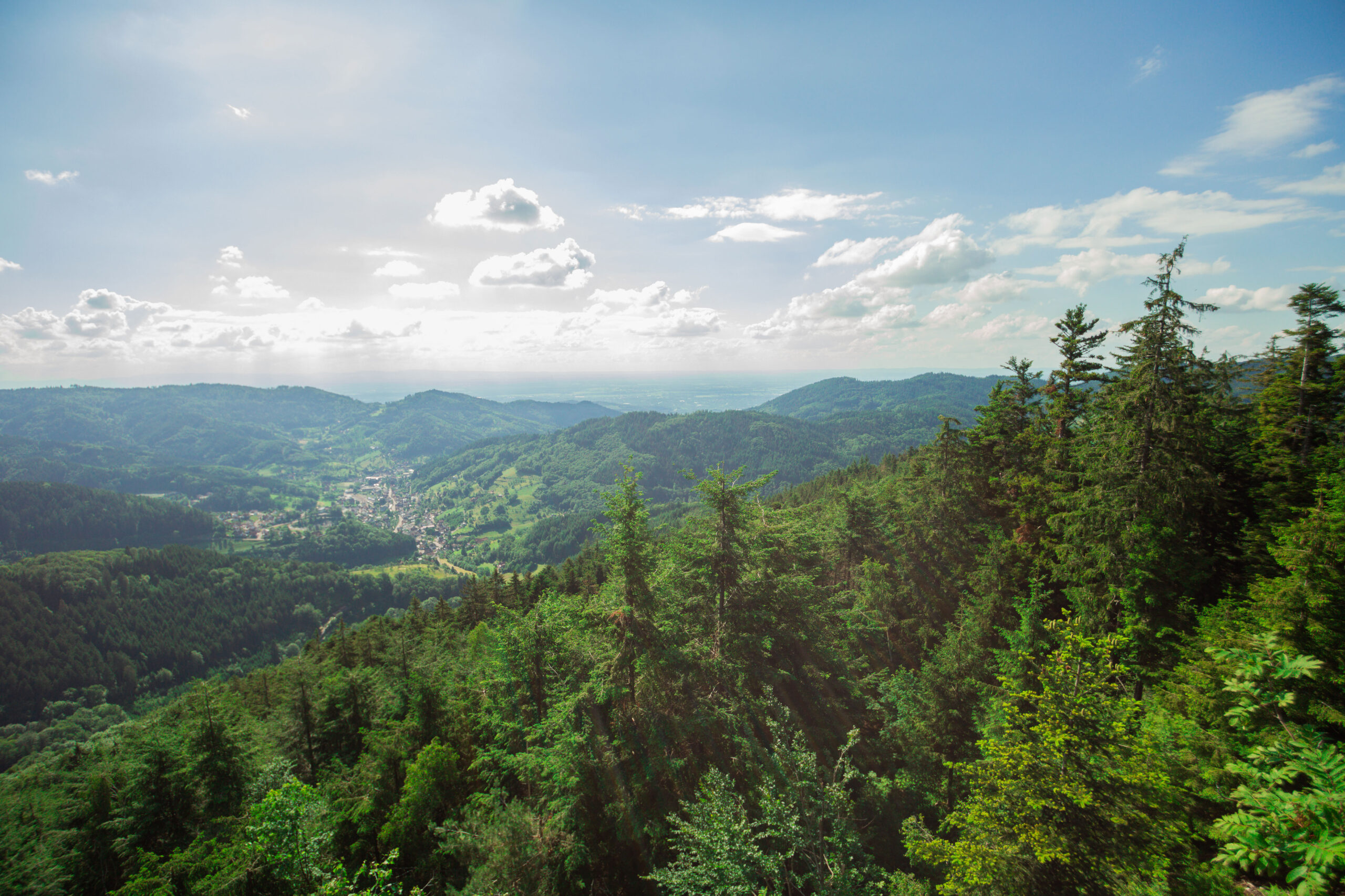
In the Upper Rhine Graben region, it has been shown that fault zones in the subsurface can locally promote the rise of hot water and, consequently, the formation of geothermal anomalies. However, with the standard exploration strategy, uncertainty remains as to whether any subsurface structures possess the necessary permeability and are connected to large-scale hydrothermal convection until a costly exploratory well is drilled. The goal of the ConvEx collaborative project is to demonstrate various exploration methods for spatially mapping hydrothermal convection using the Upper Rhine Graben as a case study and to correlate their results within integrated numerical models. Thus, the exploration strategy developed in ConvEx is intended to contribute generally to reducing the discovery risk for deep geothermal projects.
As part of the ConvEx project, the combination of the following exploration methods with standard approaches is being advanced:
- Exploration using magnetotellurics and controlled-source electromagnetic methods to detect contrasts in electrical conductivity in the deeper subsurface;
- Drilling and high-resolution surveying of temperature gradient boreholes, as well as borehole geophysics in the planned Schleidberg deep borehole;
- Integration of existing gravity field measurements to determine lateral density gradients as an indicator of porosity;
- Creation of 3D structural models and determination of petrophysical properties for model parameterization;
- Multi-scale modeling of coupled thermal-hydraulic-mechanical subsurface processes to determine the influence of faults on the potential of geothermal target structures
Project Partners